If Chaweng is where Koh Samui goes out and Bophut is where it dines, Mae Nam (often written Maenam) is where it actually lives. Stretched along a seven-kilometre, north-facing beach between Nathon and Bophut, it is the part of the island that has kept its village rhythm: fishing boats, coconut groves, family homes and long-stay expats, with Koh Phangan sitting on the horizon across the water.
For buyers, that character translates into something concrete — lower entry prices, genuine year-round rental demand, and room to grow as the north coast slowly develops. This guide covers what it's like to live in Mae Nam, how to get around, what the property market looks like in 2026, and how ownership works for foreign buyers.
Why buyers choose Mae Nam
Mae Nam is the answer to a very common question on Koh Samui: how do I stay close to the beach and the airport without paying east-coast prices or living in the middle of the nightlife? The beach here is broad, shallow and calm — better for swimming and children than the surf-prone stretches elsewhere — and because the coast faces north, sunsets fall over the sea with Koh Phangan silhouetted beyond.
The town itself is unpretentious and walkable, with a real community of Thai families and long-term foreign residents rather than a rotating cast of two-week visitors. That is exactly why it holds its value as a place to live, not just to holiday.
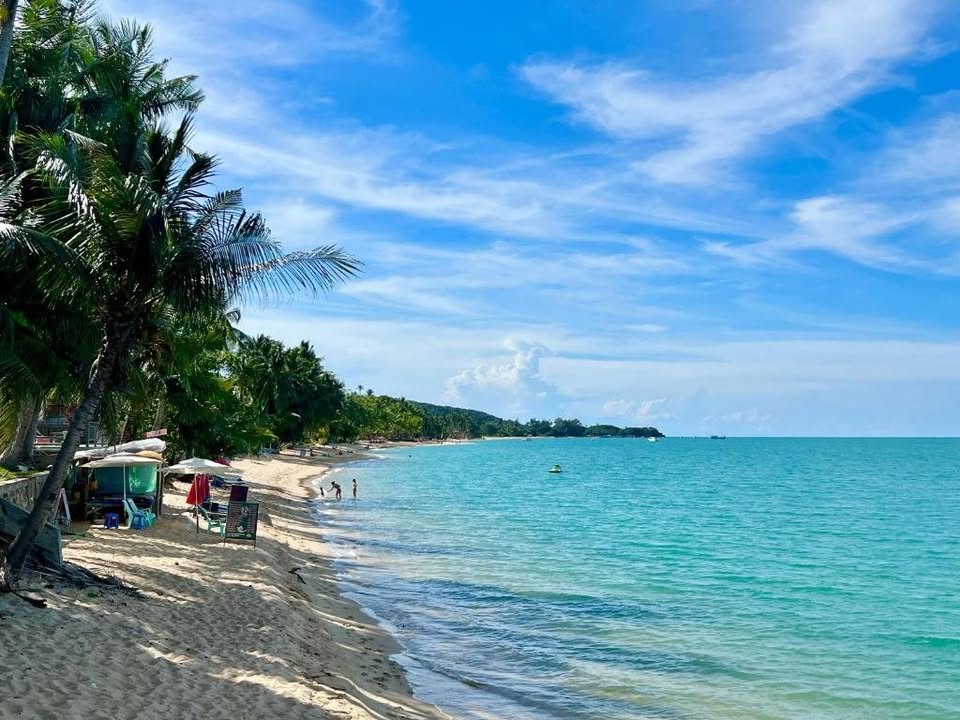
The lifestyle
Daily life in Mae Nam is low-key by design. The Mae Nam Walking Street market takes over the old town on Thursday evenings with street food, local produce and crafts; the rest of the week you'll find quiet beachfront cafés, family-run Thai restaurants, a handful of well-regarded international kitchens, yoga studios and wellness spots. For a bigger shop or a night out, Chaweng and Fisherman's Village are a short drive away — close enough to enjoy, far enough to leave behind.
It is a genuinely family-friendly base: international schools are within reach, the beach is safe for children, and the pace suits remote workers and retirees who want island life without island chaos.
Location & getting around
- Samui Airport — roughly 15–20 minutes east.
- Chaweng (shopping, hospitals, nightlife) — about 15 minutes.
- Nathon (town, government offices, car ferry to the mainland) — about 15 minutes west.
- Koh Phangan — the Mae Nam pier runs ferries across the channel, making it an easy day trip (or Full-Moon-Party access without living next to it).
- Santiburi Golf Club — one of the island's best courses sits right here in Mae Nam.
The island's Ring Road runs straight through, so a car or scooter makes the whole of Samui accessible within 30–40 minutes.
The property market in 2026
Mae Nam offers one of the widest ranges of property on the island, precisely because it spans flat beachfront land and rising hillside behind it:
- Sea-view land — hillside plots with Koh Phangan views, still priced well below comparable east-coast land.
- Pool villas & family homes — from compact modern houses to larger private villas, aimed at owner-occupiers and long-stay rentals.
- Beachside land & houses — walkable-to-the-sand plots and cottages that rarely reach the wider market.
- Condominiums — a smaller but growing segment, and the simplest route to freehold ownership for foreign buyers.
Broadly, Mae Nam sits at a lower price point than Chaweng, Bophut or Choeng Mon for equivalent land and build quality — which is where much of its investment appeal comes from.
The investment case
Two things make Mae Nam interesting to investors. First, demand is year-round rather than seasonal: families, remote workers and long-stay guests choose it for the calm, so well-managed homes aren't reliant on peak-season tourism alone. Second, lower purchase prices lift the yield maths — the same rental income against a smaller purchase price is a stronger return.
Rather than quote a headline figure, we'd rather you model it. Every Chowrest listing links to our Samui Investment Valuator, which uses 2026 Koh Samui benchmarks to show the income a specific property could actually produce — not a brochure number.
Can foreigners buy in Mae Nam?
The same rules apply across Thailand:
- Condominiums can be owned freehold by foreigners, within each building's 49% foreign-ownership quota — the cleanest, simplest title.
- Land and villas are usually held via a registered 30-year leasehold (renewable) or a properly structured Thai company. A villa's building can be foreign-owned even where the land beneath is leased.
- Always confirm a clean Chanote (Nor Sor 4 Jor) title — the strongest form of title deed — plus legal access, zoning and setbacks before committing.